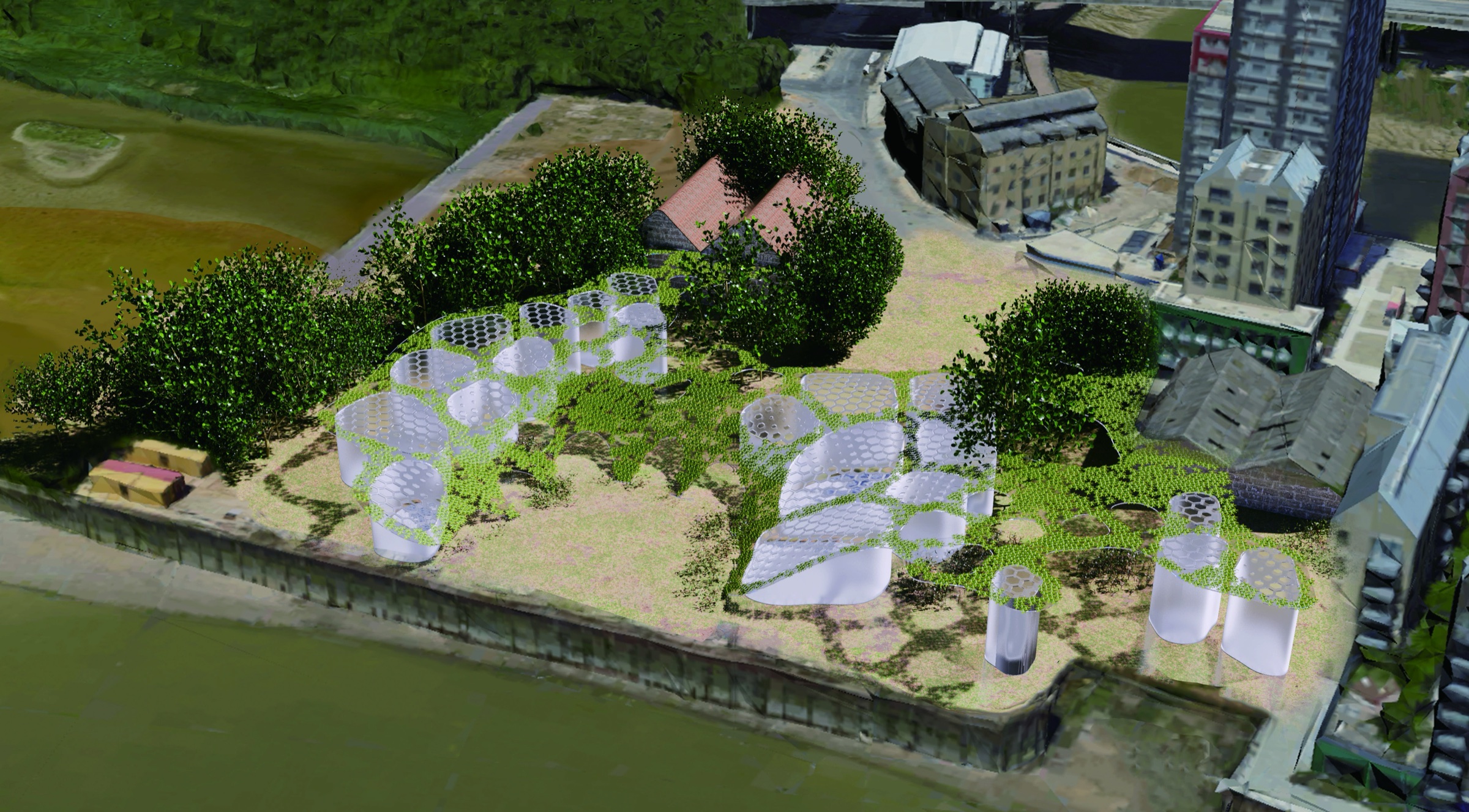
Hydro-Plantéa Atrium is a speculative architectural proposal that transforms the disused Thames Iron Works shipyard in East London into a living, energy-generating co-working space. The project centres on the design of a hydroponic biophotovoltaic (HBPV) cell — a device that combines hydroponic plant cultivation with microbial fuel-cell technology to harvest bioelectricity from root-associated cyanobacteria.
These cells are integrated into a roof whose footprint was derived parametrically from 240 simulated variants, narrowed by five quantitative criteria, then bent into 3D form by the routes of human interaction across the site. The result is a self-sustaining architectural system that monitors biodiversity through bio-acoustic sensors powered by the energy it produces.
The brief.
01 / BRIEFThe project began with a provocation: how can we breathe new life into a historically significant, abandoned site while reimagining its role within the community?
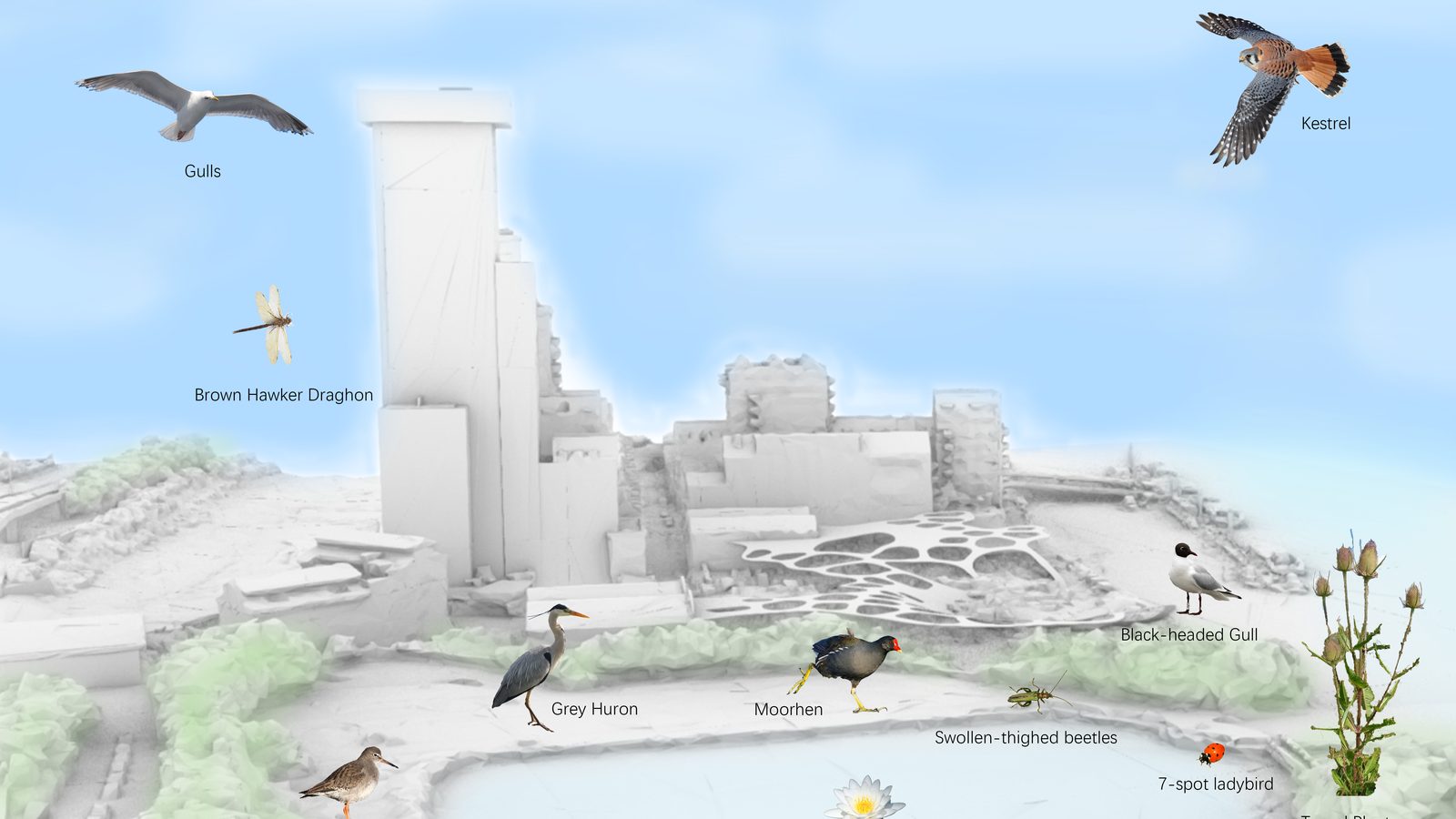
The Thames Iron Works — built in 1837 and famous for constructing HMS Warrior, the world’s first iron-hulled armoured warship — closed in 1912 and has since evolved into an unmanaged habitat hosting over 180 plant species. Our task was to design a bio-integrated system for this site that generates energy, supports local ecology, and creates usable public space — all with minimal human maintenance.
Site analysis.
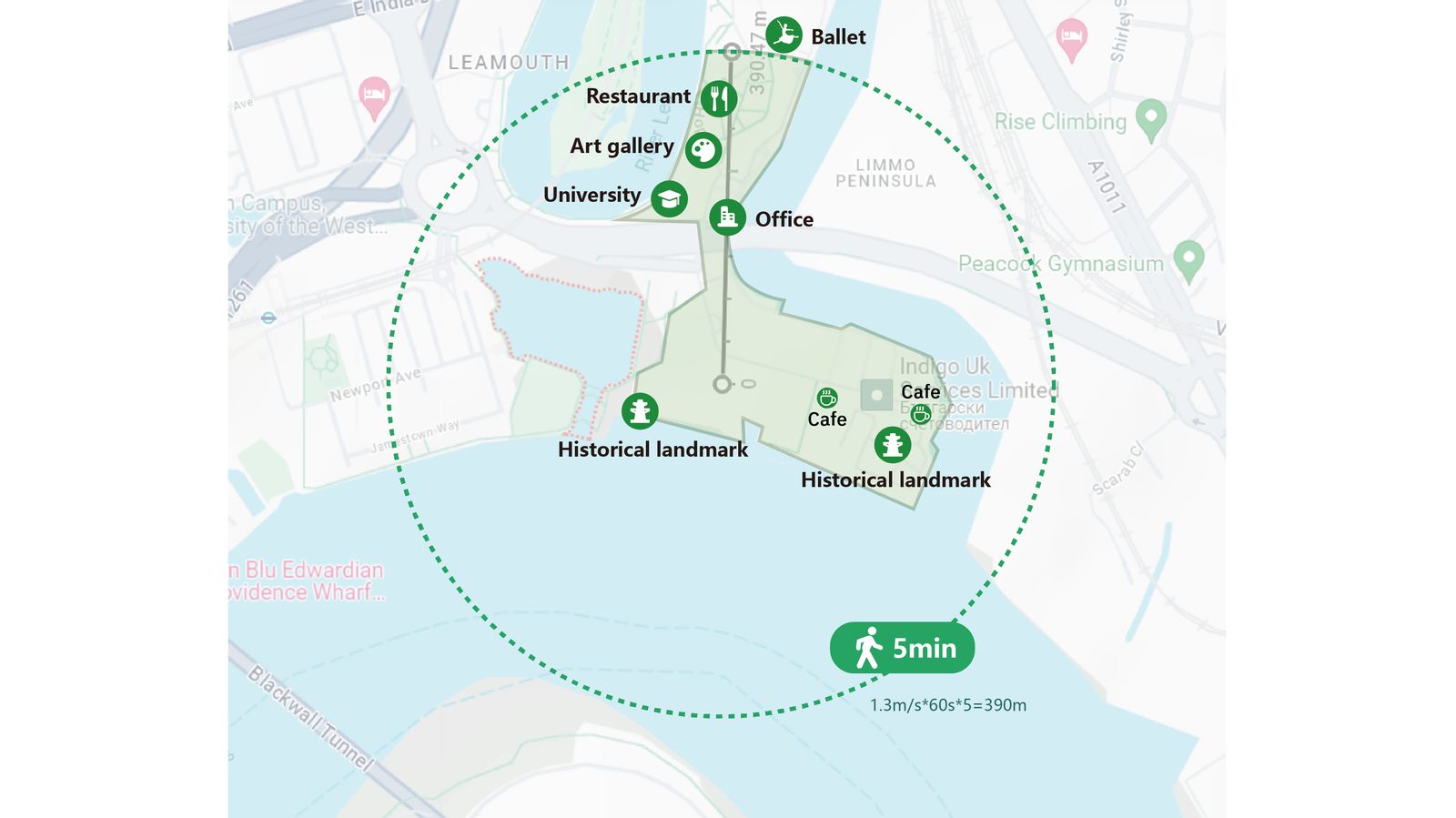
02 / SITESurrounded by water on three sides at the mouth of the River Lea, the Thames Iron Works sits within an area rich in arts, culture, and ecology — but underserved in workspace and community infrastructure. Field research confirmed that the site’s few open cafés already function as informal offices and social hubs, pointing toward a clear opportunity for a green co-working programme.
Environmental analysis covered wind patterns, solar exposure, rainfall distribution, and the existing ecology of Bow Creek Ecology Park. These datasets fed directly into the parametric roof geometry and cell distribution strategy that follows.
The HBPV cell.
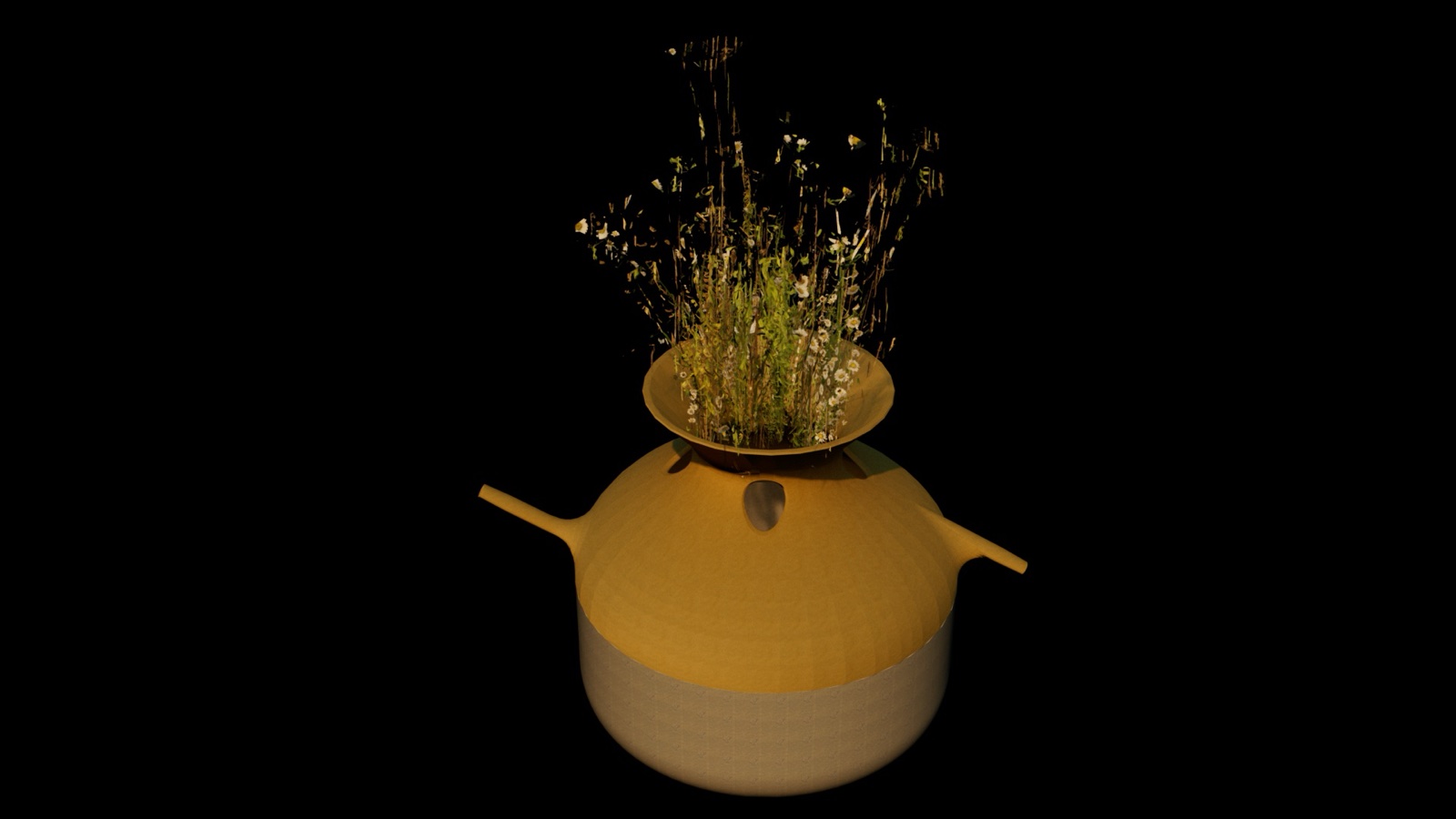
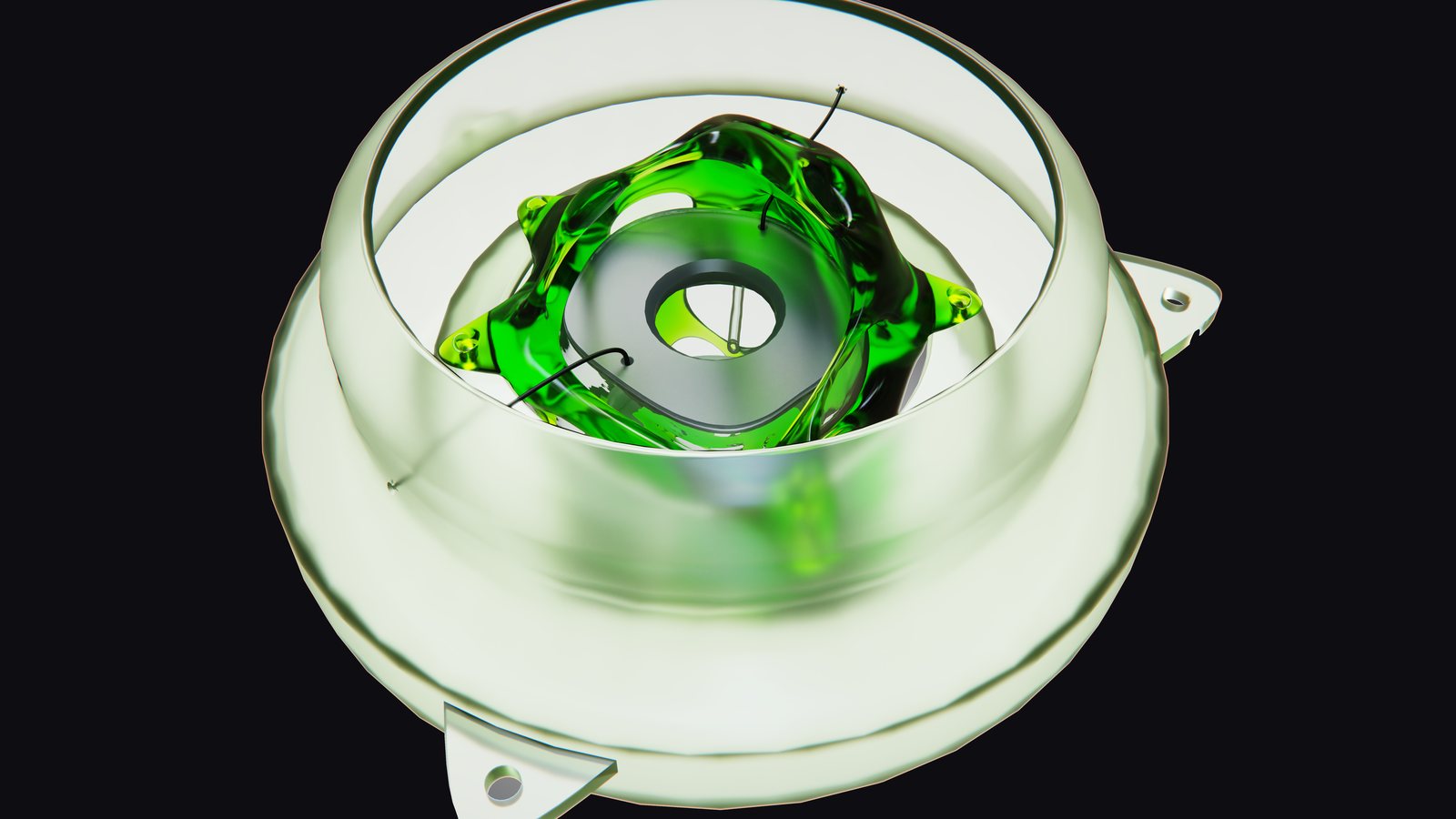
03 / DEVICEThe core innovation is the Hydroponic Biophotovoltaic (HBPV) cell. Conventional BPV systems use organisms like moss to generate small amounts of electricity through photosynthesis. Our approach uses hydroponic plants whose root systems host cyanobacteria — microorganisms that release electrons as a metabolic byproduct — captured by an anode–cathode electrode system submerged in the nutrient solution.
The cell went through six major iterations, balancing electrical performance, plant health, fabrication feasibility, and structural integrity. Early versions explored organic, branching forms but proved too complex to fabricate reliably. The final design simplified the geometry while maximising electrode contact area and providing side-mounting brackets for maintenance access on the rooftop structure.
Prototyping & fabrication.
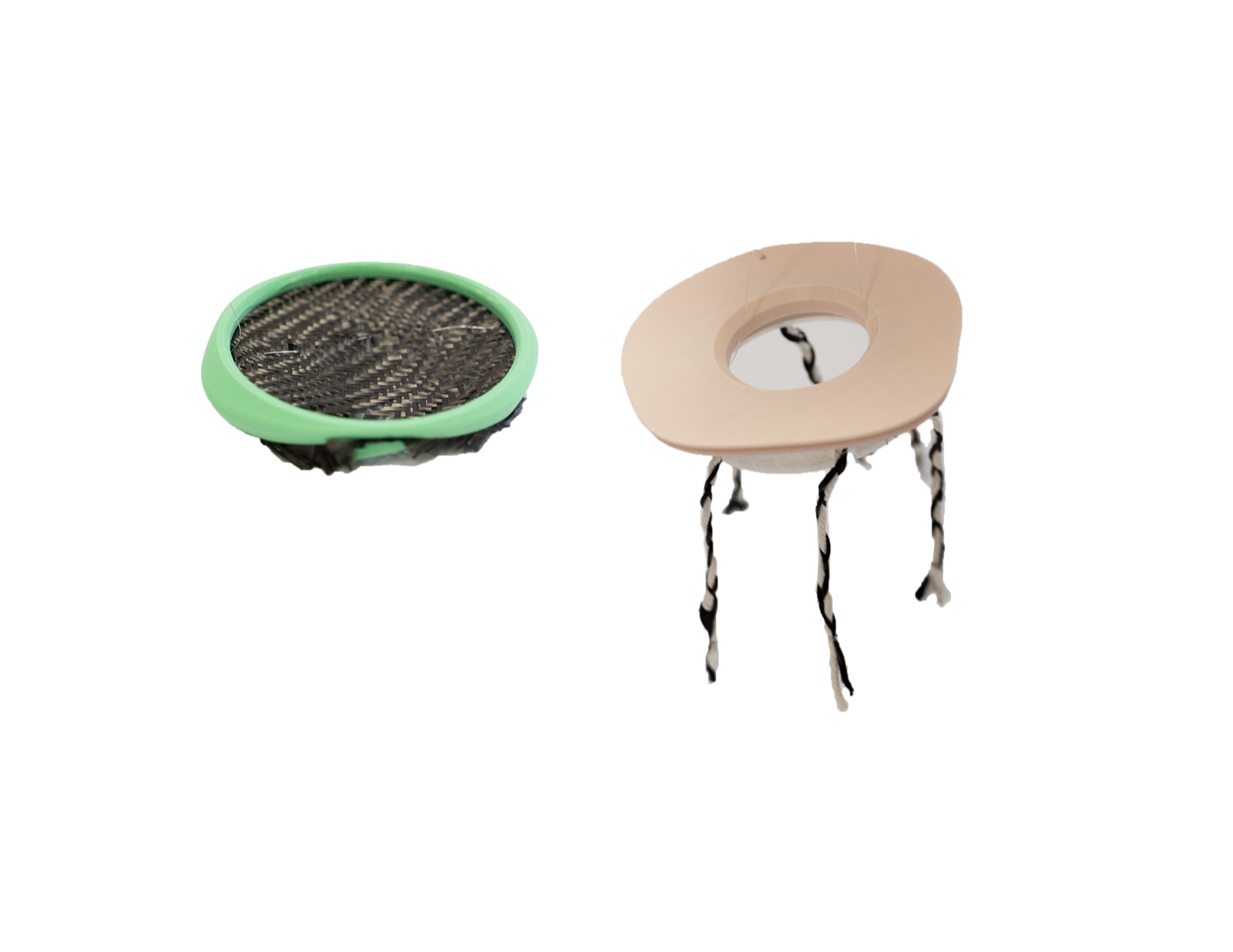
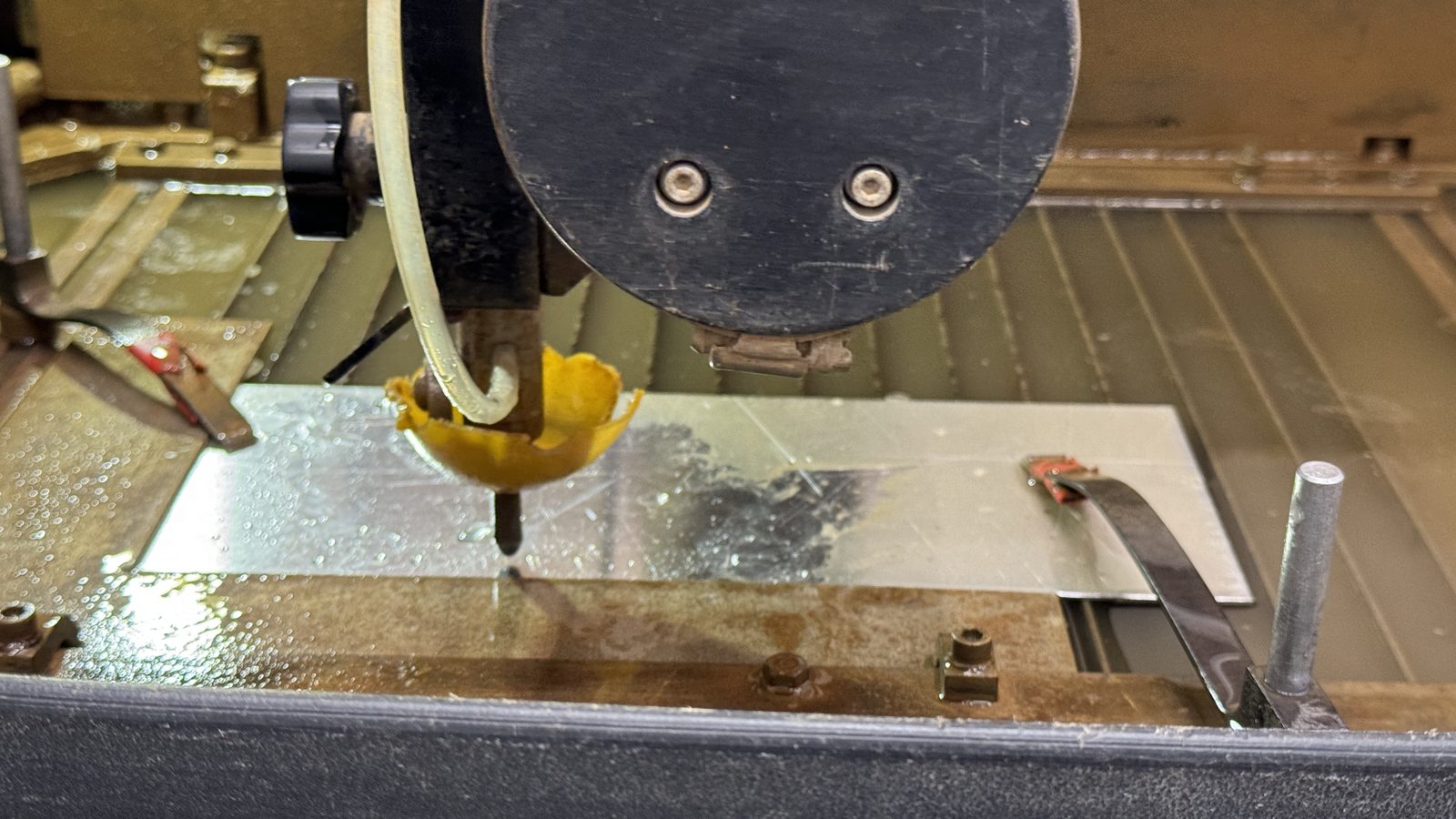
04 / MAKEPhysical prototyping combined CNC-machined aluminium moulds, 3D-printed components in PLA and TPU, and hand-fabricated elements. The cell container was CNC-scribed onto 2 mm aluminium sheet, cut with a jigsaw, and finished with lever shears. Electrode assemblies were integrated into 3D-printed housings designed for maximum microbial contact surface.
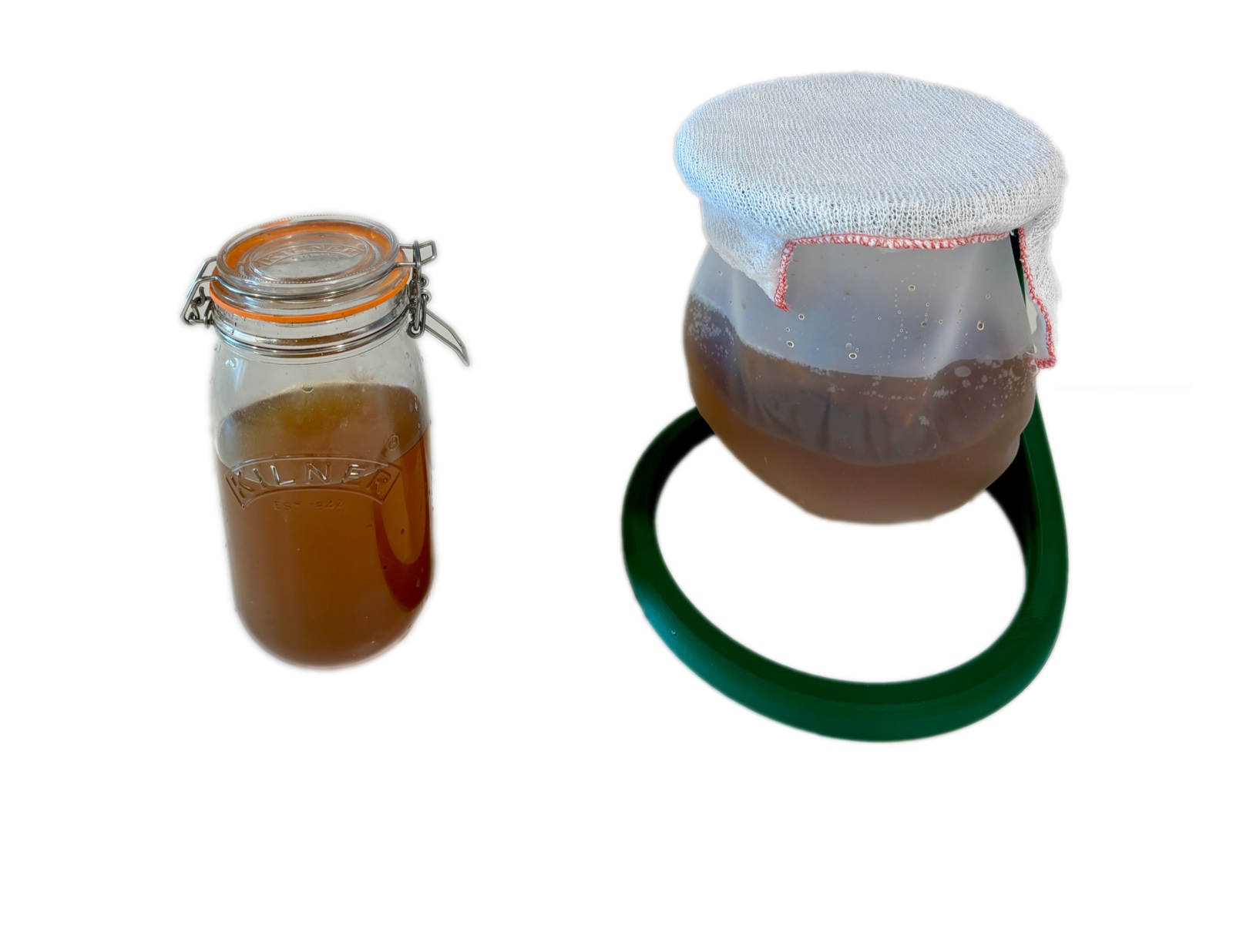
Material exploration extended to bacterial cellulose — grown in custom silicon moulds cast from 3D-printed positives — as a potential bio-compatible cell interior. Sheets were formed over TPU moulds and dried to create thin-walled containers, demonstrating a path toward fully bio-derived cell housings.
Electrical testing.
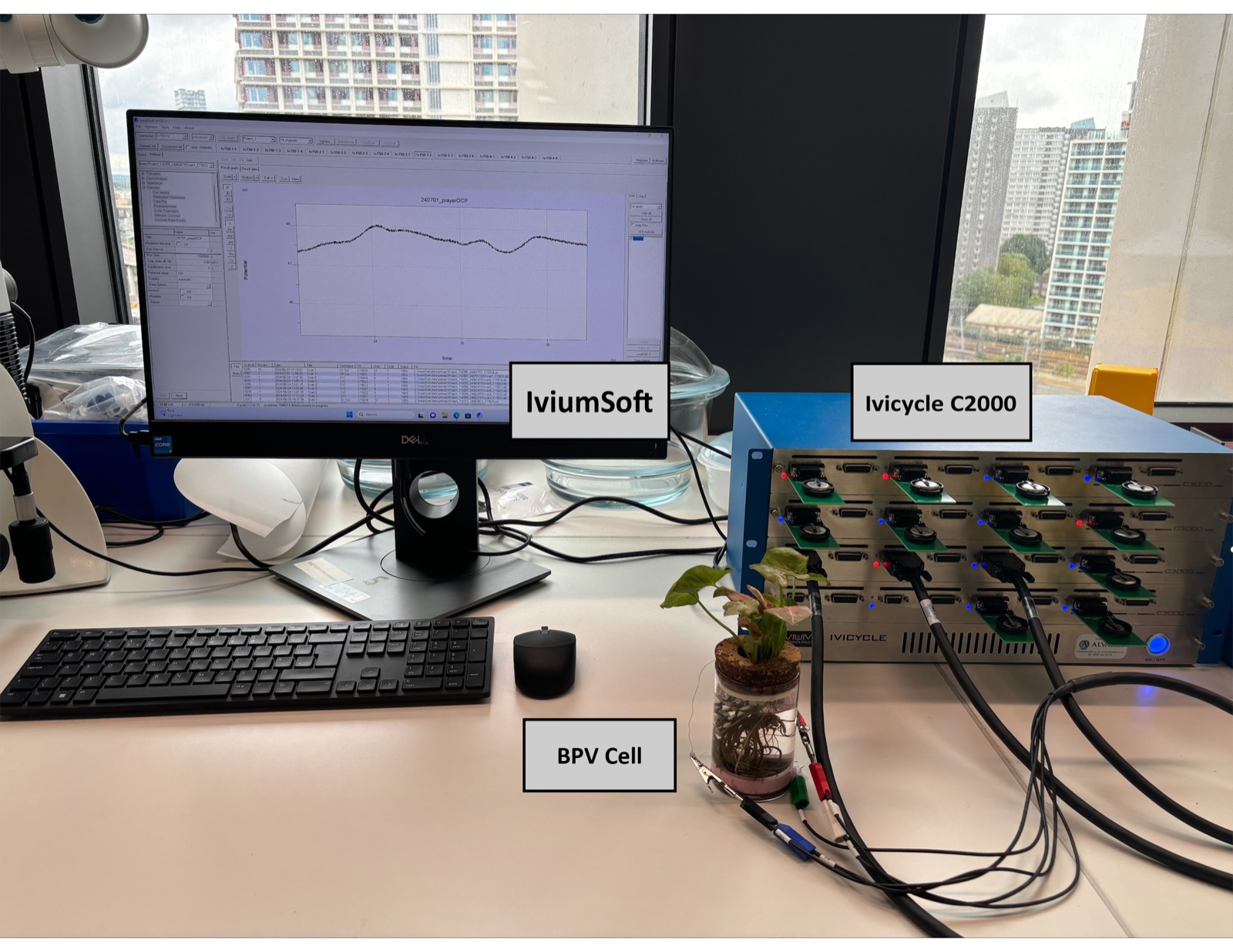
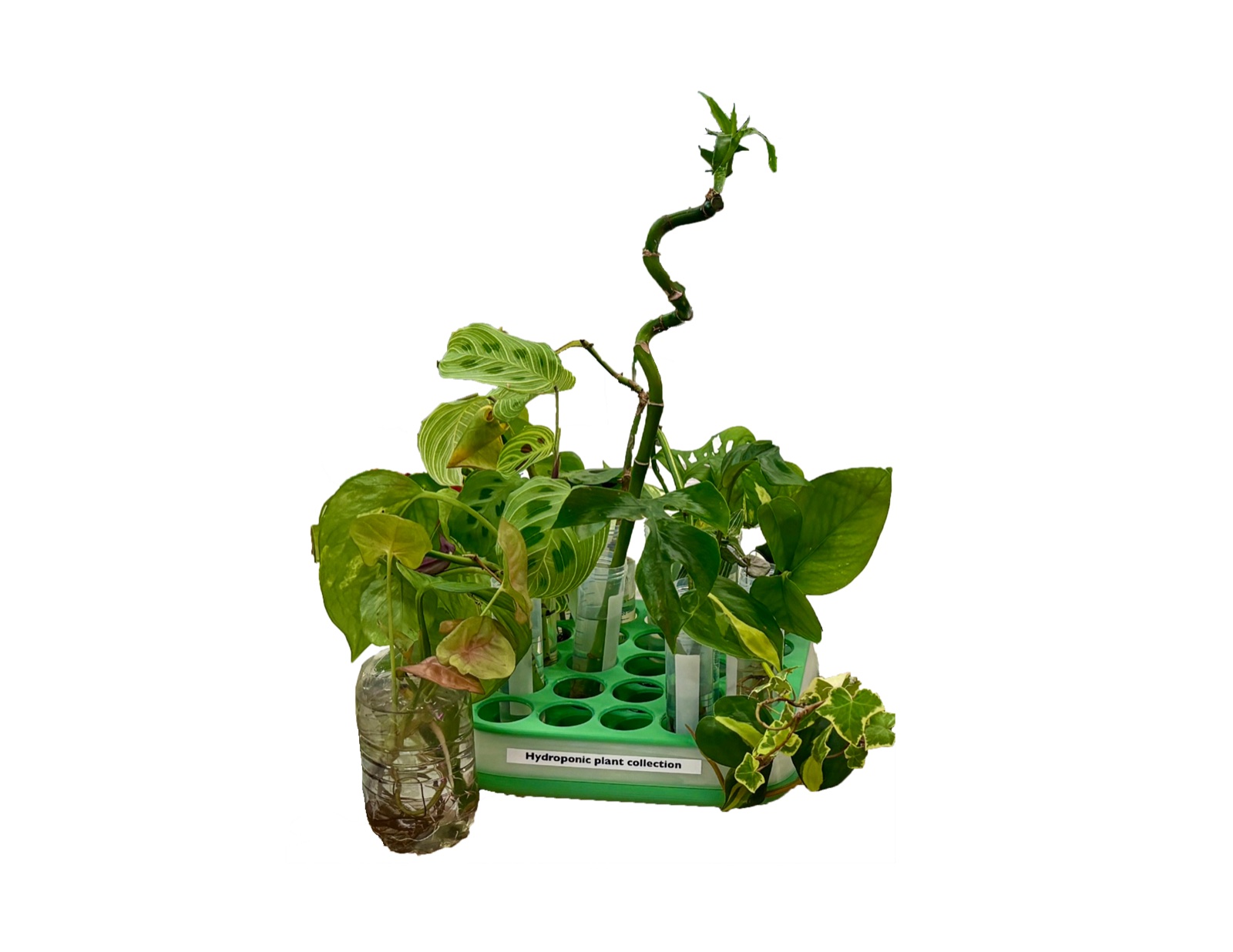
05 / TESTINGOpen-circuit potential (OCP) was measured on a benchtop rig running IviumSoft against an Ivicycle C2000 potentiostat. Three plant species — Syngonium, Maranta, and Hedera — were characterised across single-cell and three-cells-in-series configurations. Single cells reached up to 50 mV; three in series produced a 24-hour peak of 136.7 mV.
Form-finding the roof.
06 / FORM-FINDINGThe whole shape of the roof was determined by calculation, not by gesture. Working in Grasshopper against the site’s solar-radiation, wind, rainfall, and access-pathway data, the roof was generated through a parametric pipeline that started from the site footprint and ended in a single defensible form.
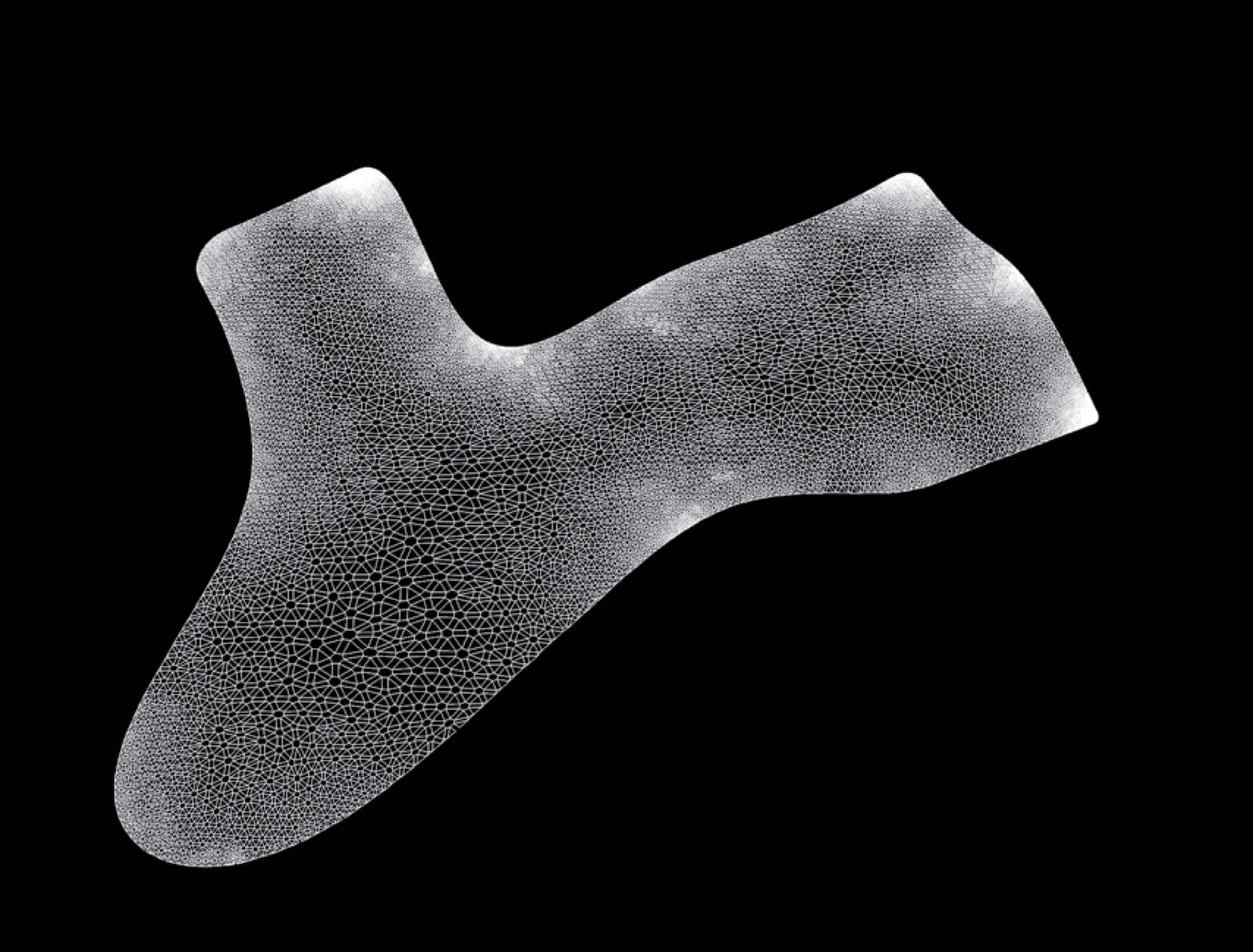
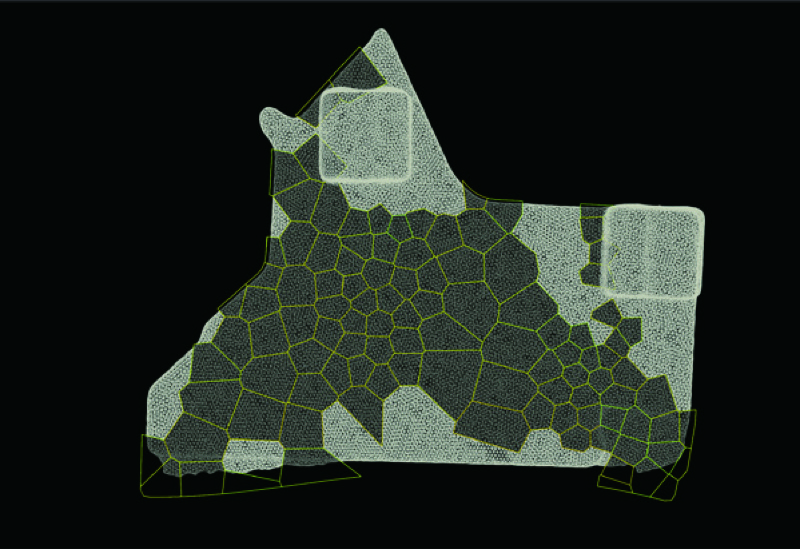
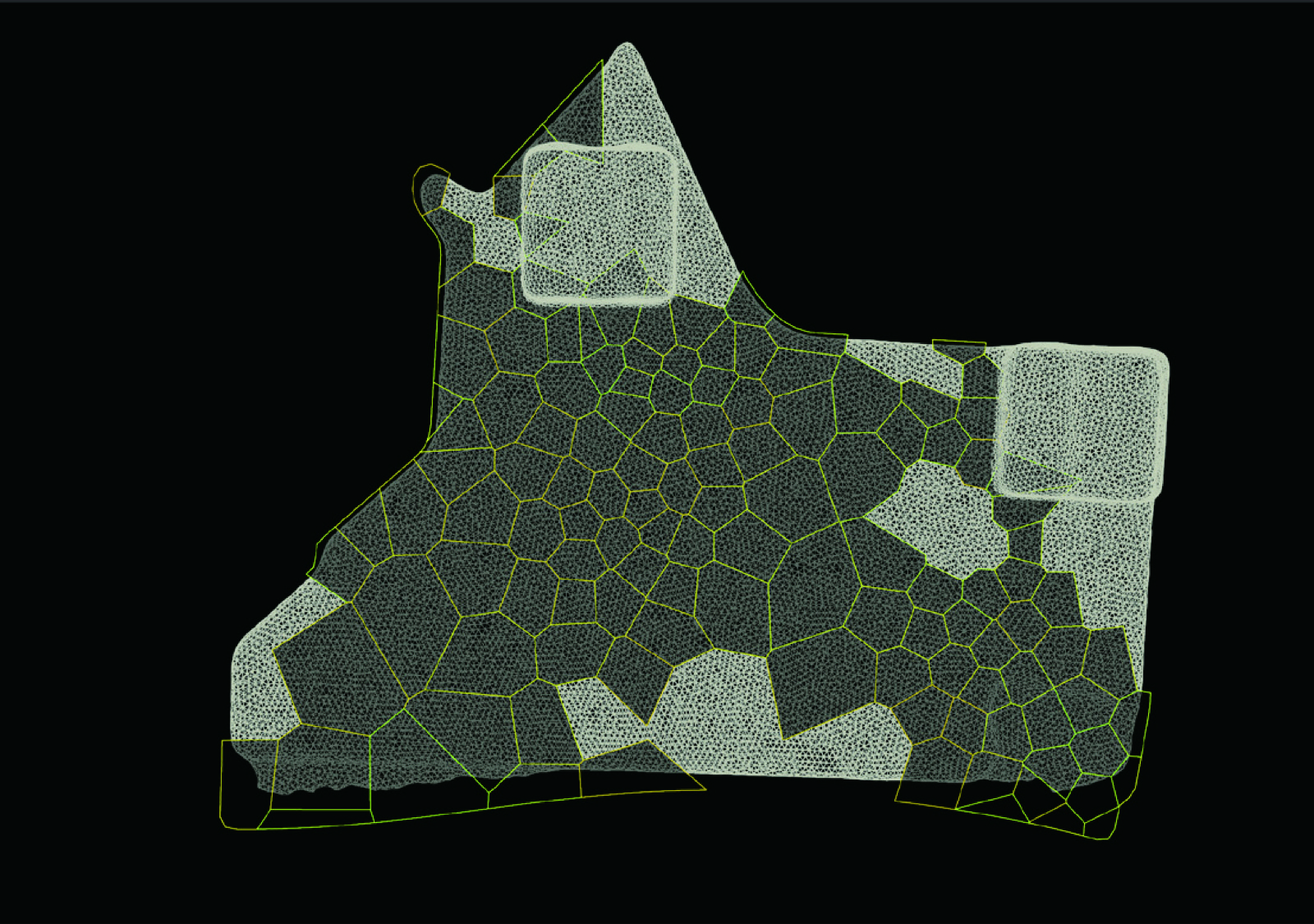
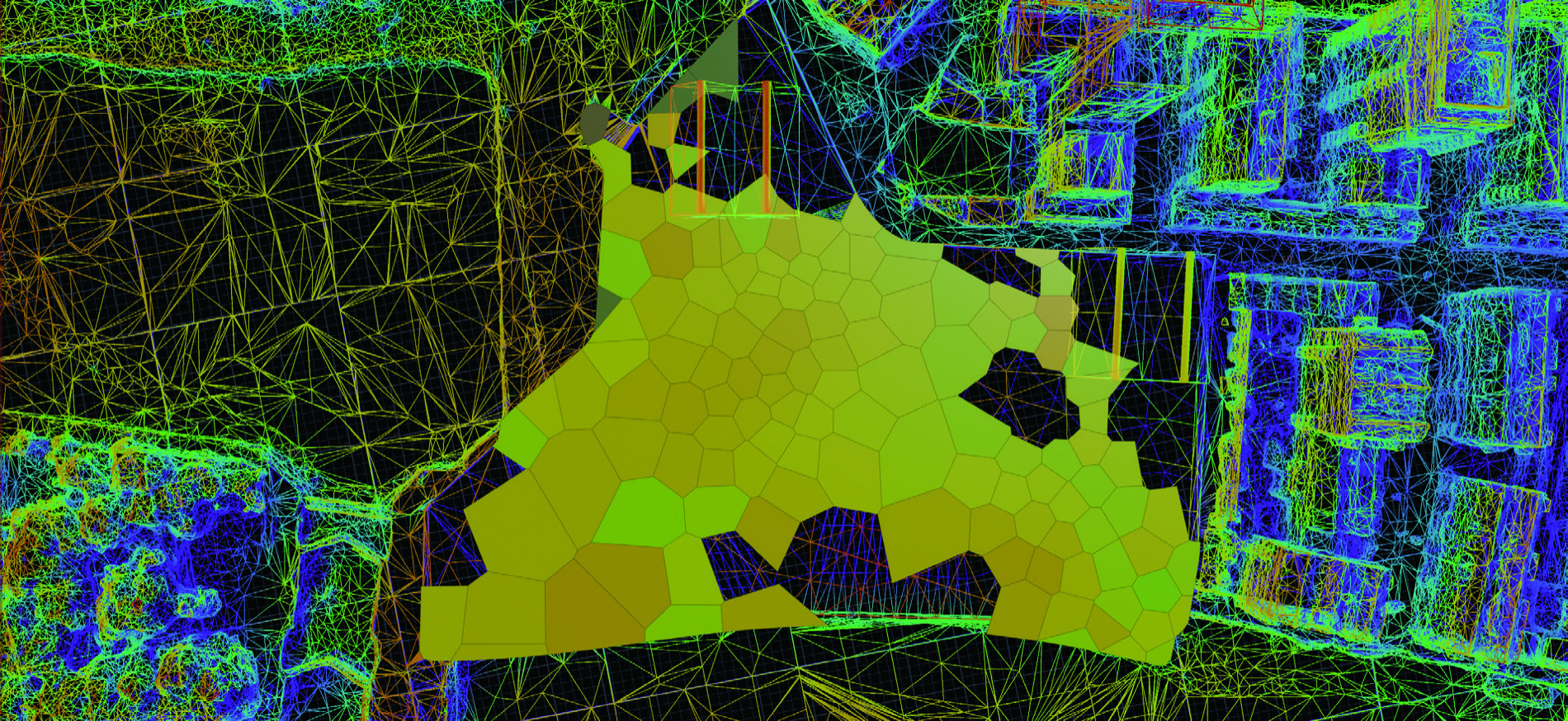
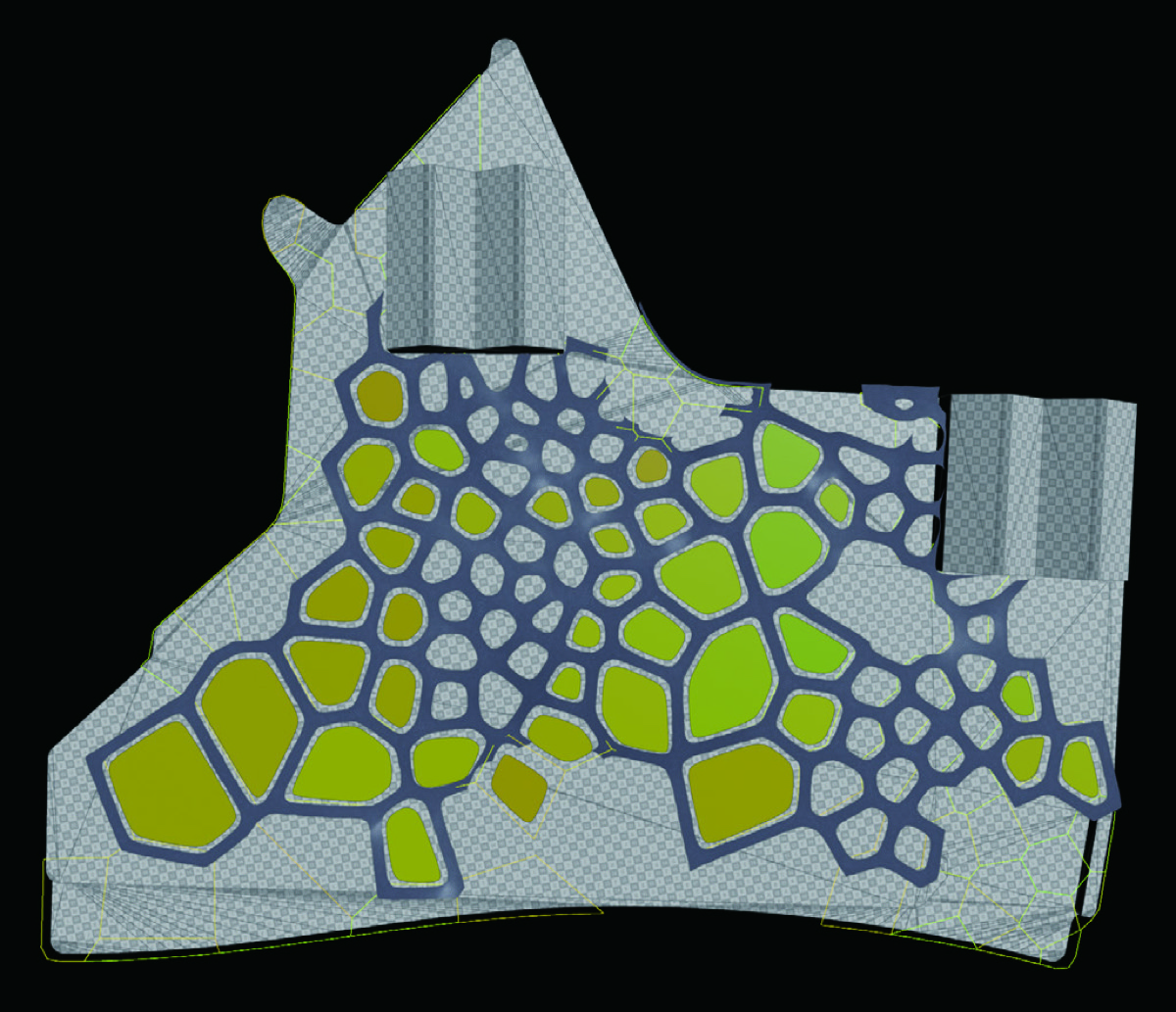
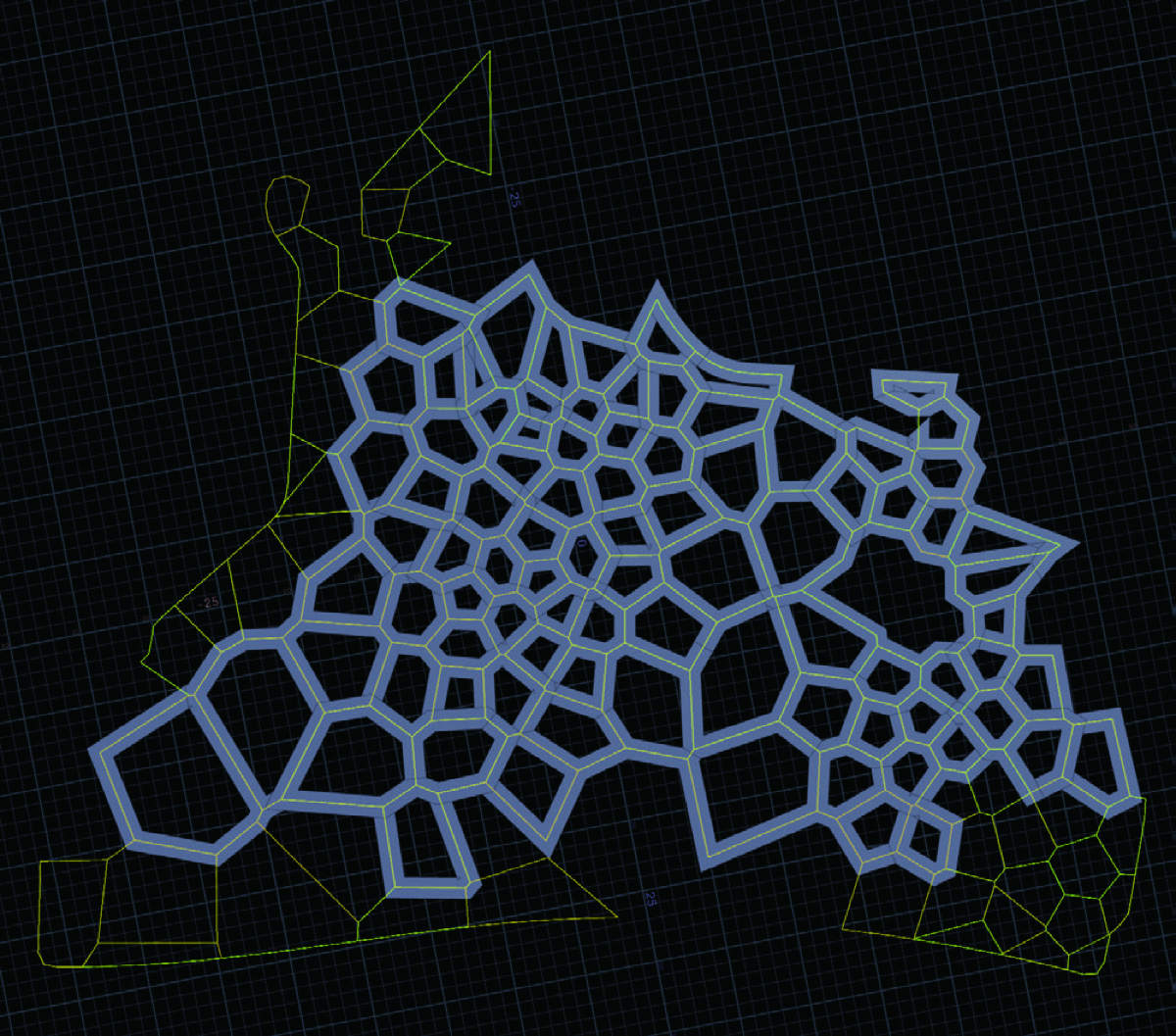
- 01 Voronoi structuralisation of the site footprint — driven by solar radiation in the west and east directions, the site was partitioned into a Voronoi cell field on top of an underlying triangulated mesh.
- 02 240 variants generated parametrically across the cell field — iterating connection between the two existing warehouses, space layout, and surface morphology.
- 03 24 shortlisted on connection ratio and design potential.
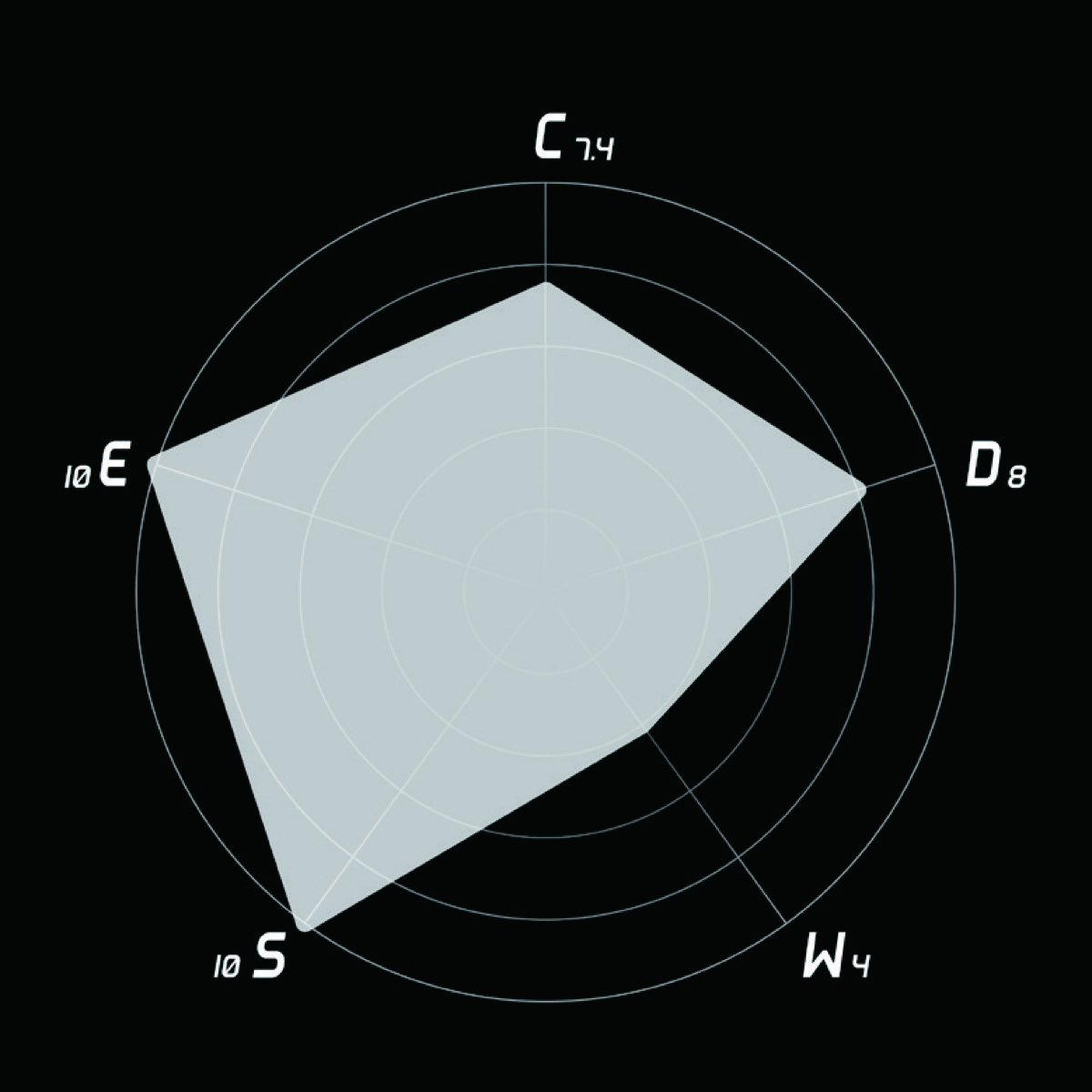
- 04 The 24 were then scored across five quantitative criteria — C, D, W, S, E — defined below.
- 05 Variant 206 was selected. It carried the highest balanced score across surface-area factor (S=10), energy-generated rating (E=10), and design potential (D=8).
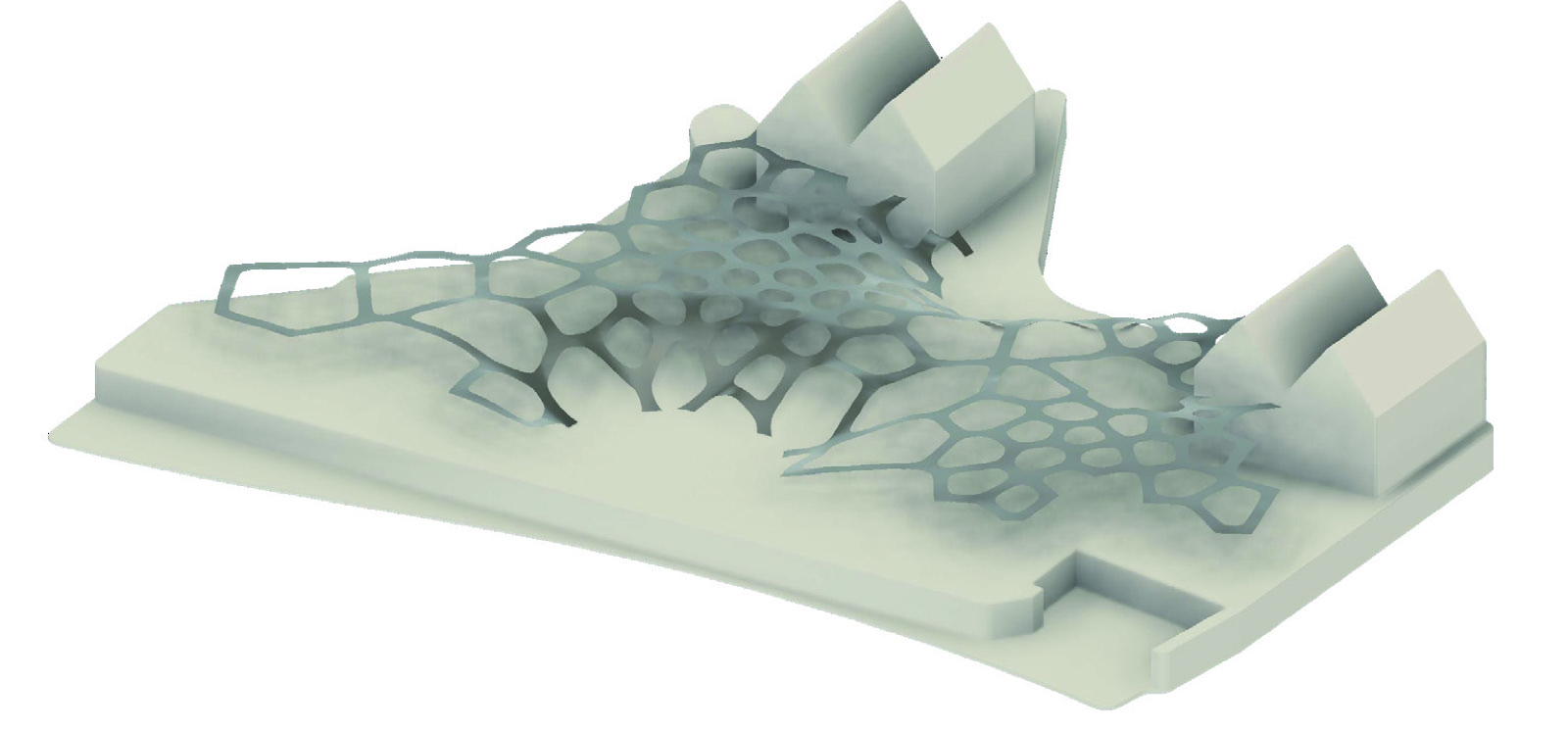
- 06 The flat roof footprint was then bent into 3D form following the flow of human interaction across the site — pedestrian routes from the riverside and street-side entrances, gathered space in the centre.
- 07 Areas where solar radiation was either too weak or too strong for hydroponic plants were closed off, or re-allocated as glass-roofed office spaces — keeping the workspace programme and the bio-energy programme on the same surface but in their respective optimal zones.
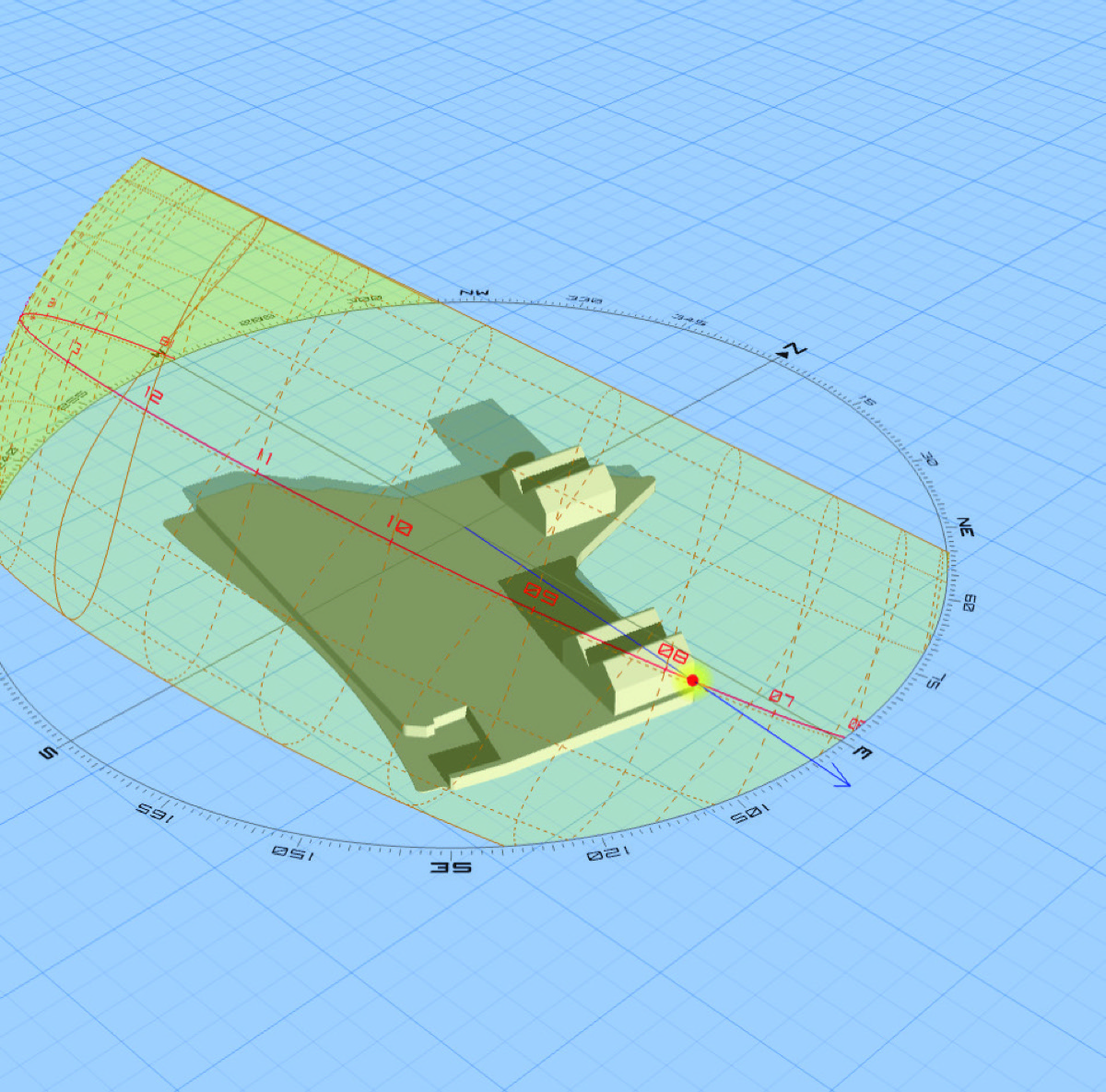
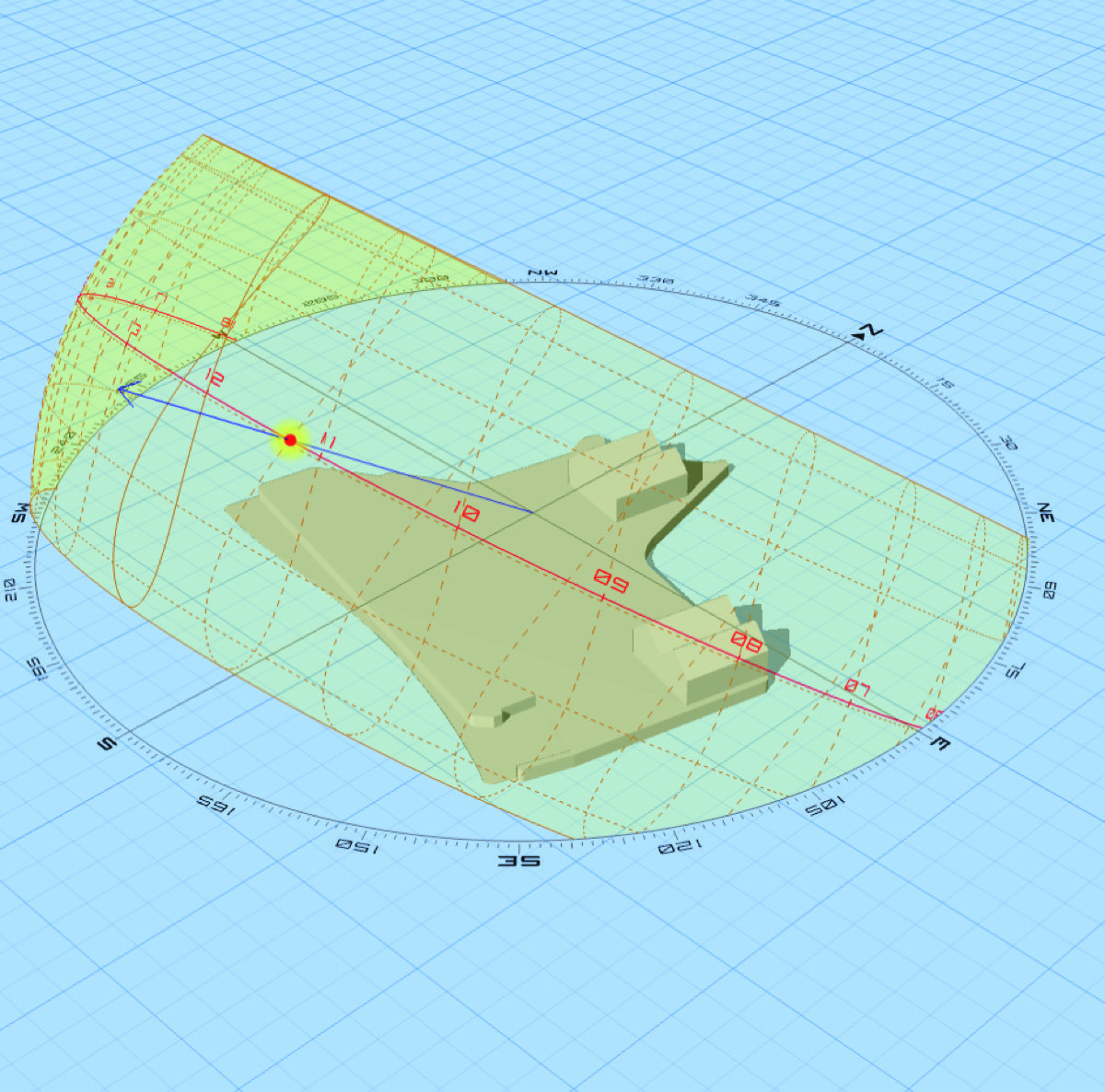
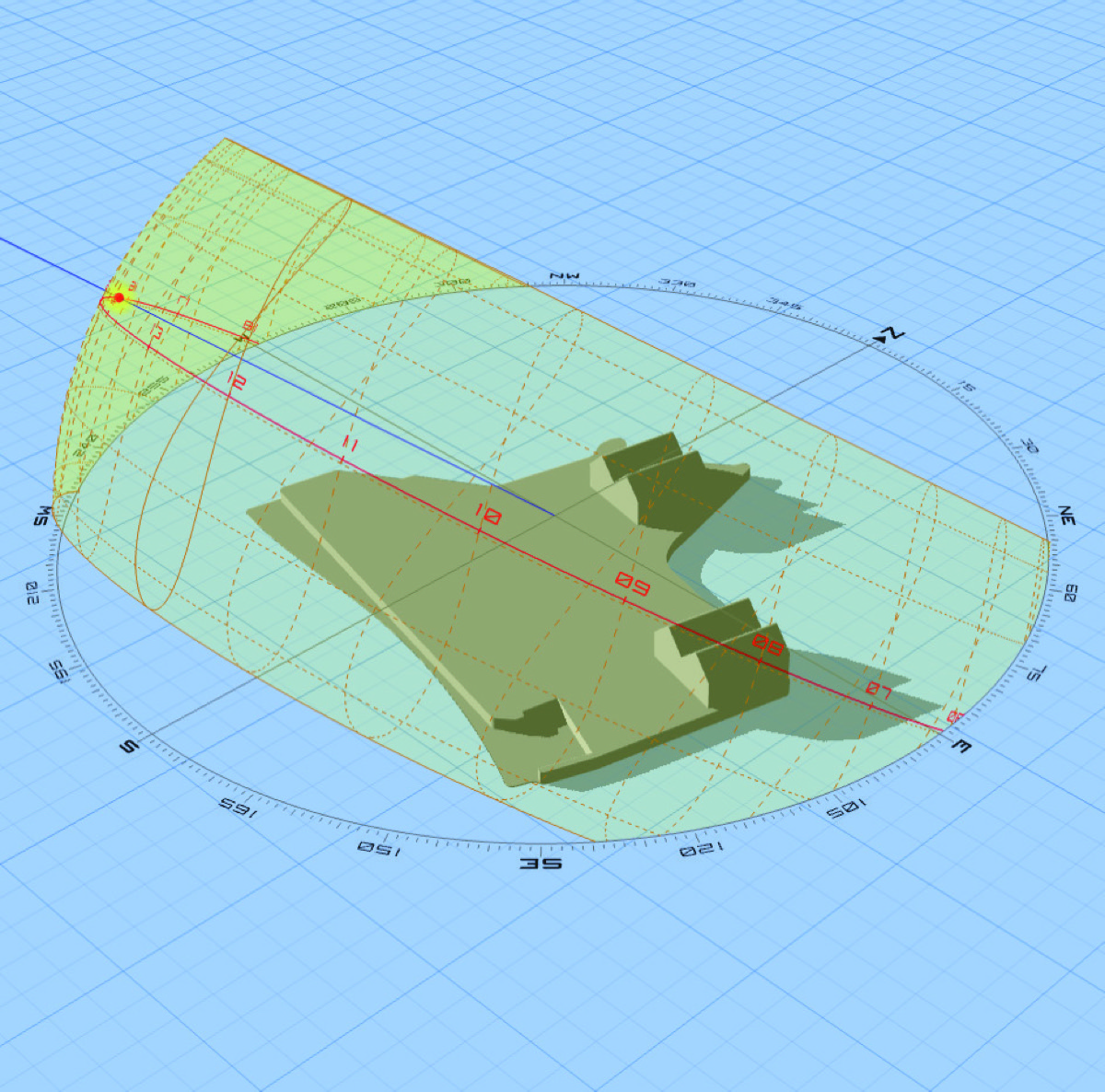
- 08 Sun-path simulation across 07:45 / 11:30 / 16:00 (24 March 2024) was run against the final geometry to verify the original radiation assumptions held.
The five criteria.
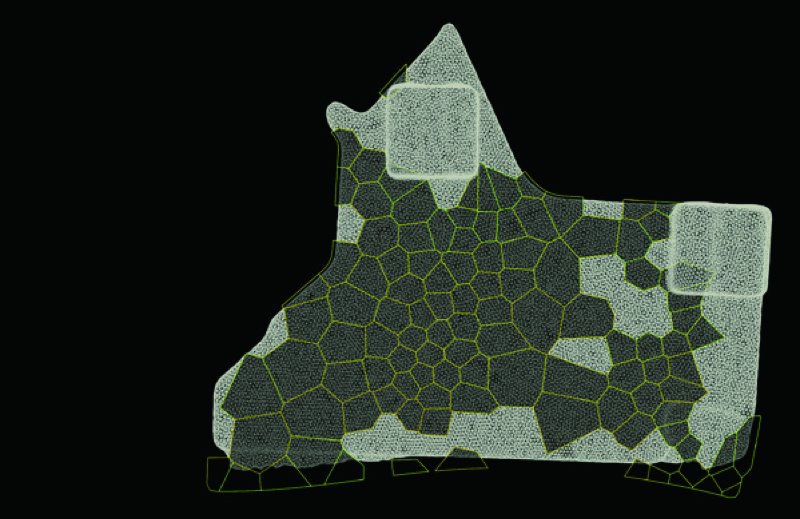
240 variants, sampled.
Six of the 240 variants generated across the parametric search — each one a different distribution of activity zones across the Voronoi cell field. The full set is documented in the project book.
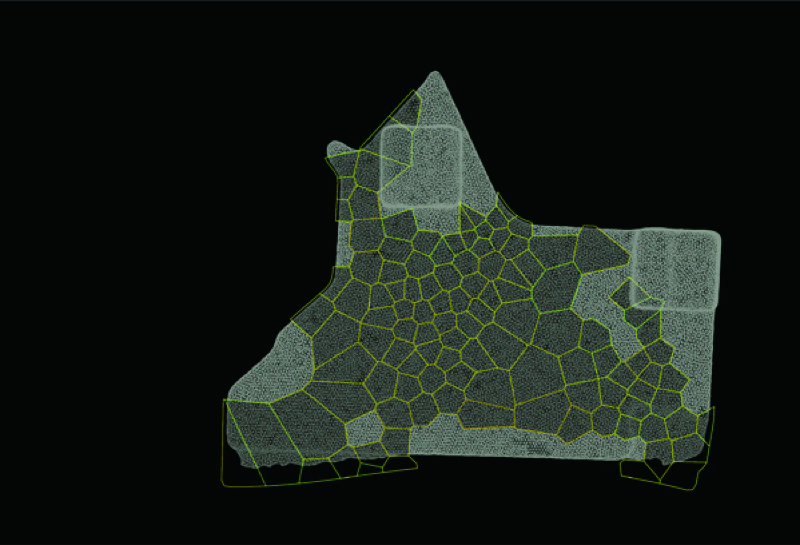
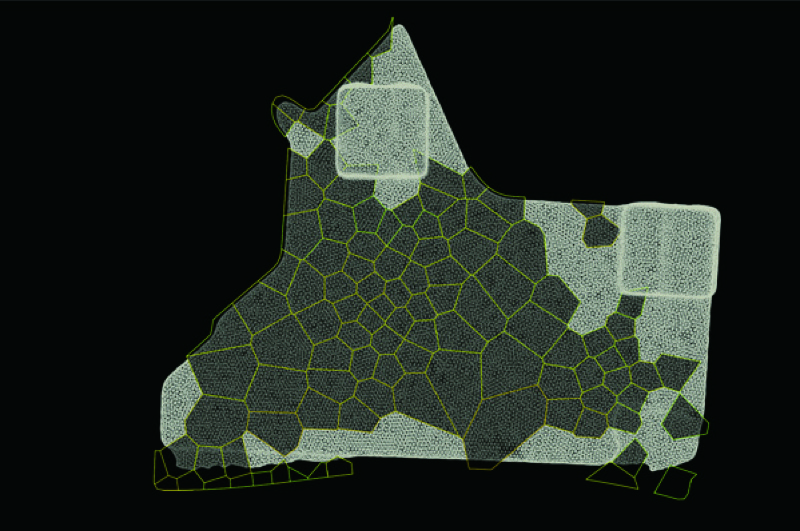
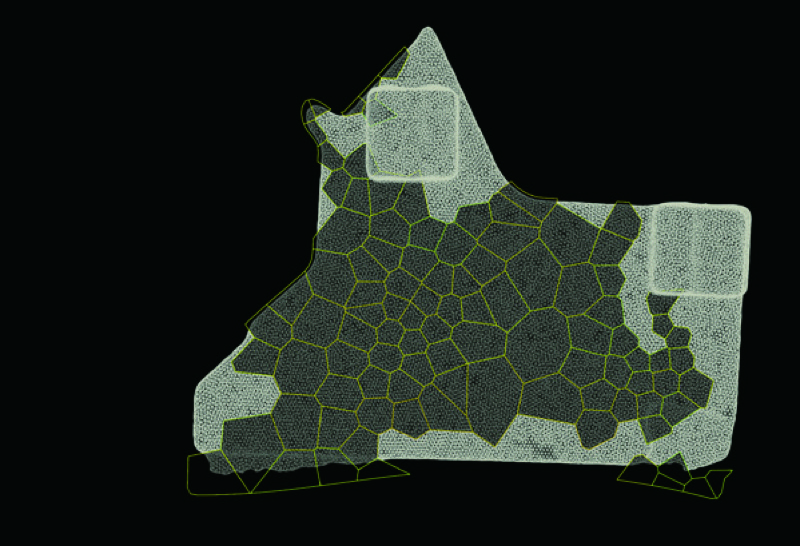
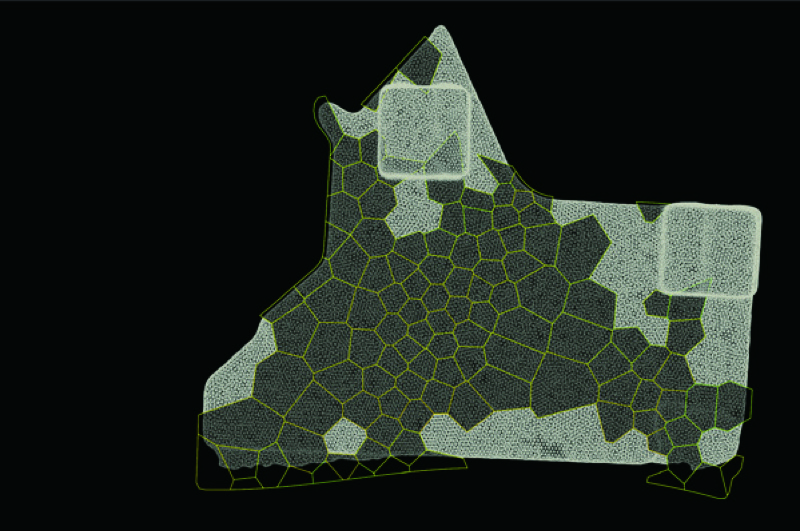
Selected: Variant 206.
Variant 206 scored highest on surface area (S=10), energy generated rating (E=10), and design potential (D=8). Its footprint, radar profile, and the underlying solar-radiation colour map across the Voronoi field are shown below.
Bending the surface.
With the footprint resolved, the flat surface was bent into 3D form by pedestrian-flow analysis. Cell sizes were further filtered into a balanced range of 0.25–0.85 (normalised) to remove geometry too small to be useful and too large to fabricate. The bend produces curvature for wind, rain and sun — aerodynamic shedding, water collection toward the channels, and varying solar exposure for different plant species. Riverside-entrance and street-side-entrance views show the same form from the two arrival points.
Sun-path verification.
Sun-path simulation against the final 3D geometry — 24 March 2024 at 07:45, 11:30, and 16:00 — confirms the radiation hierarchy held after the bend, with sun-from-east in the morning, full hierarchy at noon, and sun-from-west falling away by late afternoon.
Tile, cluster, column.
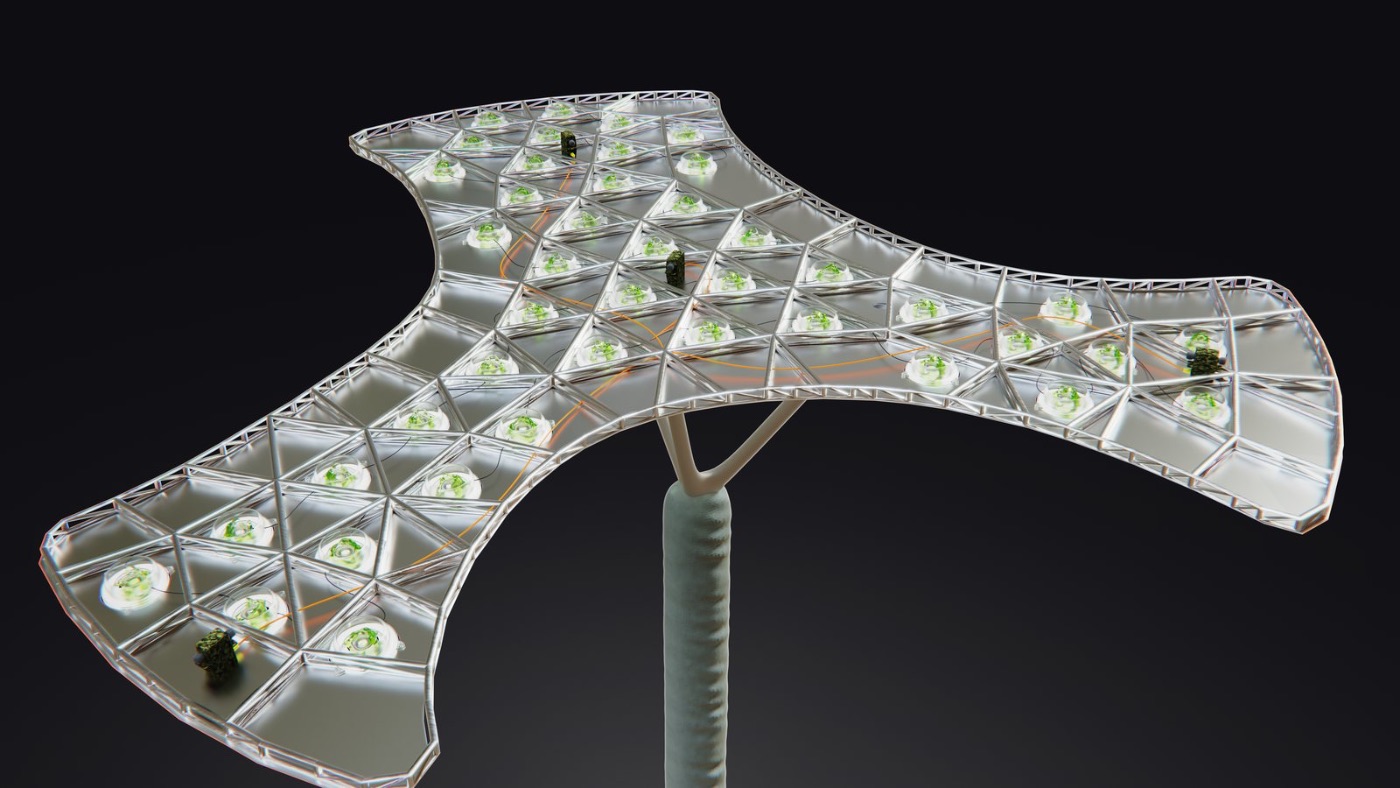
07 / TILE SYSTEMHBPV cells are mounted in tile clusters: each tile holds 18 cells (6 cells across 3 medium tiles), and the tile is suspended on a lifting column that houses electrical wiring, battery storage, nutrient distribution, and bio-acoustic sensors. The lift mechanism raises individual tiles for plant maintenance without disturbing the surrounding canopy. Bio-acoustic sensors positioned between cells monitor local wildlife; the electricity to run them comes from the cells themselves.
In context.
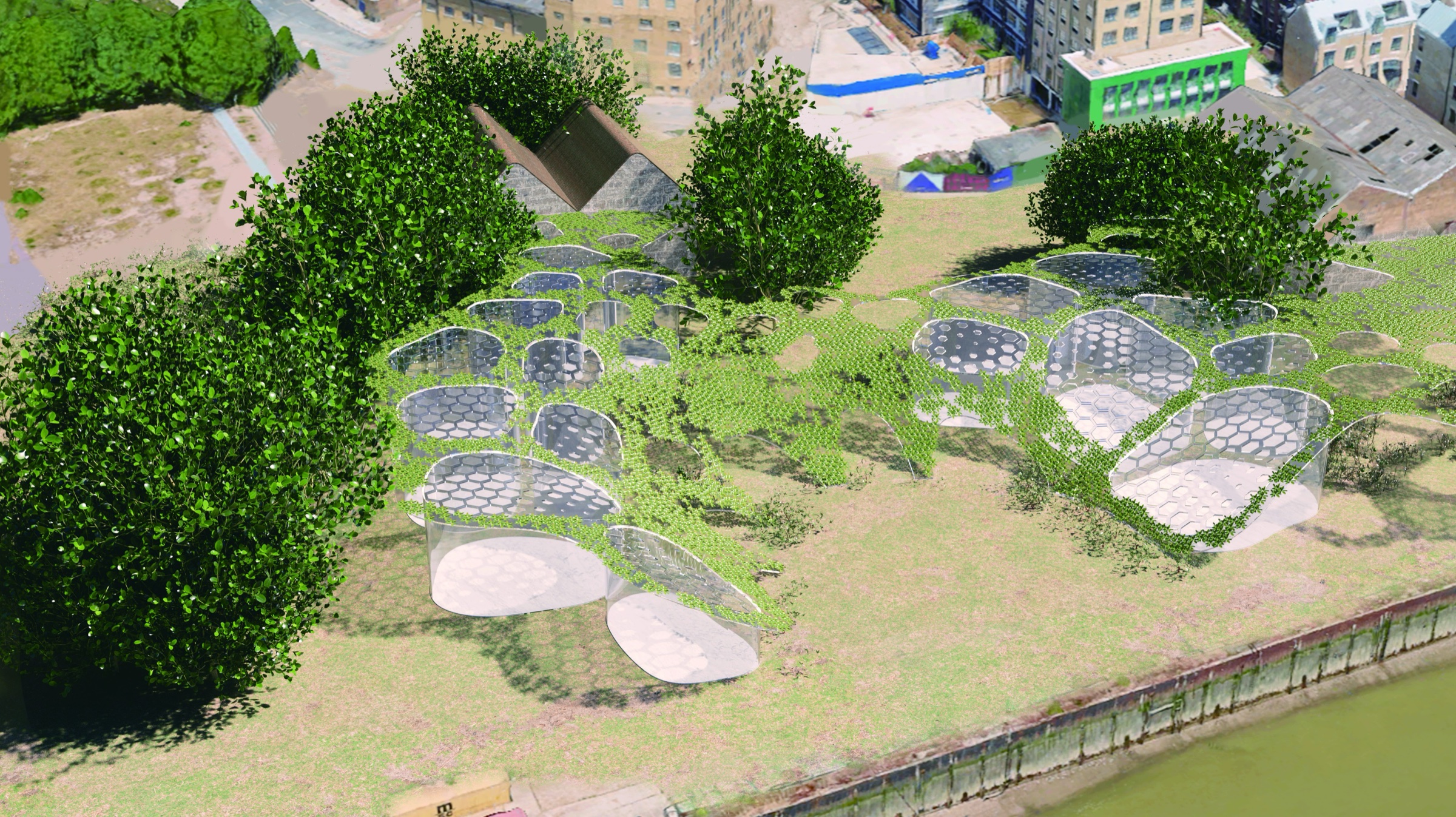
08 / SITE INTEGRATIONThe atrium as it would sit in the site’s real urban context — riverside on the south, preserved warehouses on the north, the existing tree cover absorbed into the programme rather than removed. The intent: a building that reads as a continuation of the existing ecology, not as an arrival placed on top of it.
Hydro-Plantéa Atrium demonstrated that bio-integrated systems can be designed as architectural infrastructure rather than as lab experiments dressed in renders. The HBPV cells, while producing modest voltage individually, validated a scalable approach when arrayed across a parametric structure. The project required constant negotiation between biological constraints (plant health, bacterial growth rates) and engineering requirements (electrode contact, fabrication tolerances, structural loads, solar exposure).
What carried forward: parametric design workflows translate well from screen to fabrication when the constraints are embedded early in the pipeline rather than added at the end; material experiments (like bacterial cellulose) need to run in parallel with the main design timeline to be useful; and form-finding is most defensible when every move can be traced to a quantitative input — even when the final image is what gets noticed first.